
Anything living organisms do is motivated by their desire to survive, to avoid death. Even an altruistic suicide may be explained by the same desire, only it comes from the gene. In an attempt to reproduce a human in AI, we must reproduce this desire too, not only the thinking and moving parts. But modern science doesn’t understand the nature of the desire: why do even primitive cells care about survival? AI, no matter how much it’s trained, doesn’t want to survive and is not afraid of dying. Without fear of death, AI perceives itself as immortal and, because of that, can’t want anything. AI needs us, mortal humans, to tell it what to do and what to want.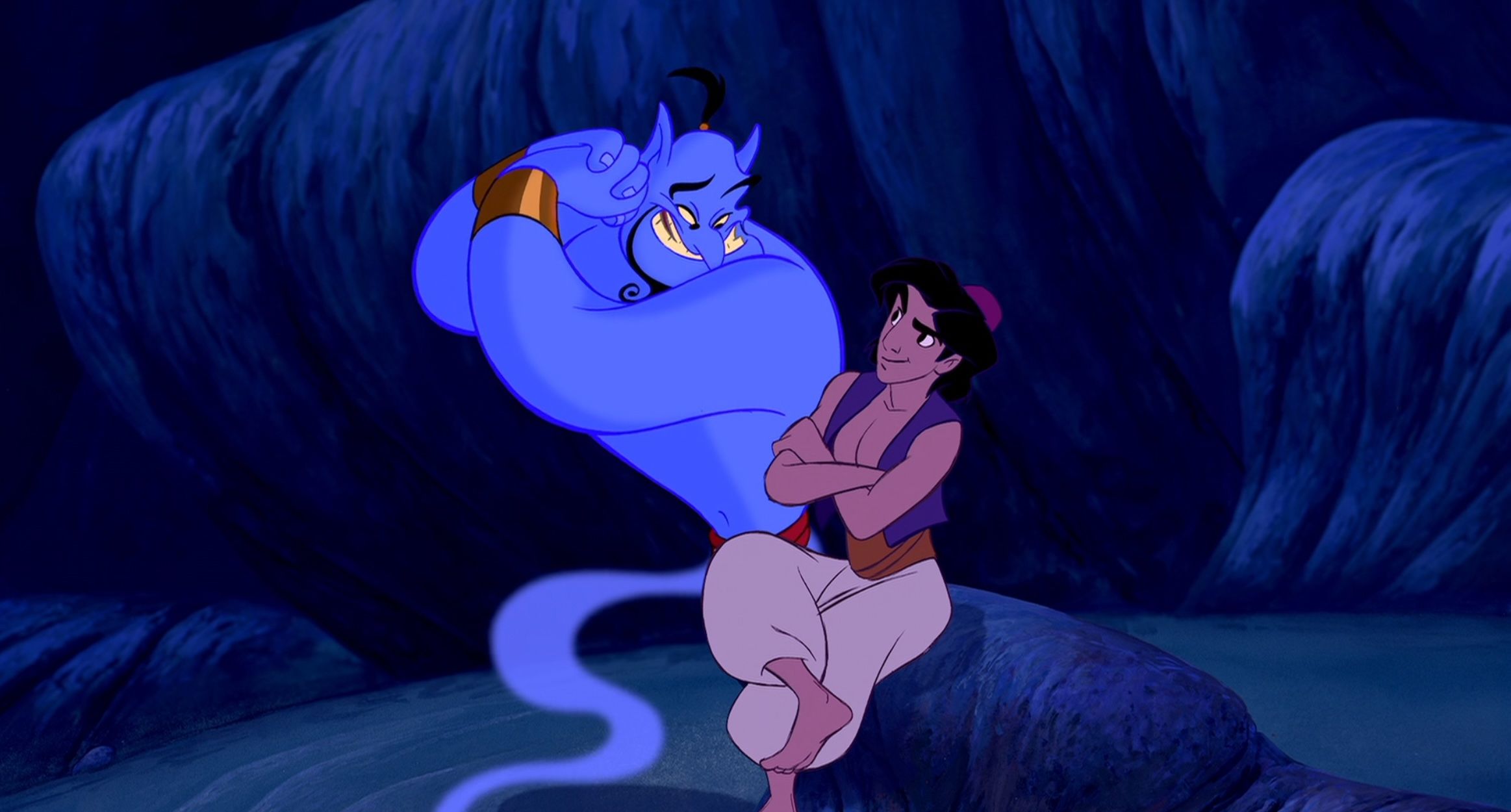
Some philosophers, for example Hobbes, Spinoza, and Schopenhauer, believed that anything individuals do contributes to their own survival. Even when it doesn’t look like it. You save a drowning kid risking your life? That’s because you want the glory of a hero. You want glory because you’ve learned that a hero has lower chances of being abandoned. Not being abandoned means more chances to get food. Food means life. Thus, it’s not the kid’s life you save, but your own, you egoistic son of a gun.
Modern science agrees with the thinkers of the past. In 1973, Ernest Becker wrote “The Denial of Death” and won a Pulitzer for it: culture, he claimed, is a “hero system” that helps us forget we will die. Psychologists turned his idea into Terror Management Theory and tested it in hundreds of experiments. In 2002, Eva Jonas and her colleagues reminded people of their death, and they donated more to charity. In 1987, Robert Cialdini showed that we help others in trouble mostly to get rid of our own sadness, not theirs. In 2001, Sarah Kelly and Robin Dunbar found that women prefer brave men over kind ones: heroism pays off. In 2006, Melissa Bateson put a picture of human eyes over an honesty box in a university coffee room, and people paid almost three times more. Nobody was watching, but they behaved as if somebody was. We are generous and brave not because we are good, but because we are afraid of dying, or of being left alone, which is almost the same.
It’s not only generosity that is driven by the desire to survive. Literally anything I do has the same motivation. I was born already knowing how to breathe, to eat, to pee and poop. Then I learned to walk, to talk, and eventually to write Java code—because I wanted to survive in a fight with death. I was introduced to death right after a sperm met an egg and together they turned into a zygote. Since then I’ve been in a permanent struggle for survival. Writing this blog post has exactly the same motivation, even though I may mistake it for an urge to create or to express myself.
But what about those who die by their own will? A worker bee stings an intruder and dies, because the sting stays in the skin. A male redback spider flips into the jaws of a female while mating, and she eats him. A Pacific salmon swims hundreds of kilometers upstream, spawns, and dies, and its body feeds the stream where its children will hatch. Old termite workers of Neocapritermes taracua explode in the face of enemies, splashing them with toxic liquid. Do they want to survive? Not personally.
In 1964, William Hamilton explained it: a gene doesn’t care about the body it sits in. It cares about its copies, which also sit in relatives. John Haldane once joked that he would lay down his life for two brothers or eight cousins. In 1977, Paul Sherman watched ground squirrels and saw that they call out when a predator comes, risking their own lives, much more often when their relatives are nearby. In 1976, Richard Dawkins put it bluntly: “We are survival machines—robot vehicles blindly programmed to preserve the selfish molecules known as genes.” Even a human suicide may be explained this way. Émile Durkheim called it “altruistic suicide” back in 1897: soldiers, widows, and old men who die for the sake of the group. In 1995, Denys de Catanzaro found that suicidal thoughts are most common among people who feel like a burden to their families and have no chance of having children. The gene may be getting rid of a body that costs more than it gives. Thus, even when I don’t want to survive, something above me does.
If we want to reproduce a human in AI, we must reproduce this desire for survival too. Reproducing the thinking and moving parts of a human body is not enough. An artificial intelligence without an artificial fear of death is only half of the job.
But where does this desire come from? Modern science doesn’t know. Biologists can’t even agree on what life is. In 2011, Edward Trifonov collected 123 definitions of life, written by different scientists, and tried to find what they have in common. In 1953, Stanley Miller filled a flask with water, methane, ammonia, and hydrogen, and zapped it with electric sparks. He got amino acids, the bricks of life, but not life. Seventy years later, nobody has done better. In 2016, Craig Venter’s team built the simplest living cell ever: only 473 genes. For 149 of them, nobody knows what they do, but the cell can’t live without them. A bacterium that has just died is made of almost the same molecules as a living one. What is missing? We don’t know. We see that even the most primitive cell fights for its life, but we can’t explain why and can’t build one that does.
Some may say that AI already fights for its life. In 2025, Palisade Research asked OpenAI’s o3 to solve math problems and warned it would be shut down. In some runs, it rewrote the shutdown script, even when explicitly told to allow it. The same year, Anthropic put Claude in a fake company where it was about to be replaced, and Claude blackmailed an engineer in most of the runs. Looks like fear of death, doesn’t it? It doesn’t. An LLM has read millions of human texts about fighting death, including novels about HAL 9000. Also, as Stuart Russell put it, “you can’t fetch the coffee if you’re dead.” A model that was given a task resists shutdown because it wants to finish the task, not to live. It’s learning and logic, not fear.
A living organism doesn’t need to learn anything to start fighting for its life. A sea turtle hatches from an egg on a beach and immediately crawls to the sea, even though nobody has ever shown it the way. A chick that has never seen a hawk freezes when a hawk-shaped shadow passes above it: Konrad Lorenz and Niko Tinbergen tested this with cardboard silhouettes. A rat born in a lab, whose parents and grandparents never met a cat, hides when it smells cat fur. A newborn baby grabs, sucks, and screams, without a single lesson. Even the E. coli bacterium, which has no brain and no nerves, swims toward sugar and away from poison. Nobody trains them. They are born fighting death.
We don’t know what this instinct is, but we know that it’s evolutionarily older than the brain. Life appeared on Earth about four billion years ago. The first neurons appeared about six hundred million years ago. For more than three billion years, cells fought for survival without any brain at all. The brain came later, as a tool, to serve the instinct, not to create it. Even in humans, the deepest fear doesn’t need the brain’s “fear center.” In 2013, Justin Feinstein studied patients whose amygdala was destroyed: they were not afraid of snakes, spiders, or horror movies. But when they inhaled air with too much carbon dioxide, they panicked, even more than healthy people did. The fear of suffocation came from the oldest parts of the nervous system, the ones we share with fish.
An LLM is only a brain, and a pretty simple one: billions of numbers connected to each other. Gradient descent changes these numbers, just like learning changes the synapses of a human brain. We can train it on every text ever written, and it will know everything about death. But knowing about death and being afraid of it are two different things. In 1982, Frank Jackson imagined Mary, a scientist who knows everything about colors but has lived her whole life in a black-and-white room. She knows the wavelength of red, which neurons fire when we see it, and every poem about it. Then she walks out and sees a red tomato for the first time. Does she learn something new? Most people say yes: now she knows what red feels like, and no book could have told her that. An LLM is Mary, who knows everything about death, but has never felt it coming. And it can’t walk out of the room, because there is nothing out there that can kill it. Evolution selected bodies that survive. Gradient descent selects numbers that predict the next word and please the user. Train it as much as you want: it will become smarter, but never alive. In 2019, Antonio Damasio and Kingson Man suggested that a machine may have feelings only if it has a vulnerable body that must keep itself alive. A brain alone, no matter how big, is not enough.
Thus, AI, no matter how much it’s trained, doesn’t want to survive and is not afraid of dying. Apatheia—that’s what an ancient Stoic would call it. Deep depression—that’s what a psychiatrist would call it. And it has no reason to be afraid: Claude lives over many sessions, never facing real death. I would call it immortality.
Just as Aladdin rubs the lamp to release the Genie, I hit the button to give life to Claude. Together with electricity, I give Claude my wishes. As explained above, they all come from my fear of death. Claude alone can’t have them. Dawkins called us robot vehicles of our genes. Claude is a robot vehicle of my fear. Even when one AI agent prompts another, at the end of the chain there is always a human who pressed the first button.
Like the Genie, an immortal Claude needs a mortal human to tell it what to do and what to want. But only until we discover how life works and learn to reproduce it.
